Pasco County and the Tampa Bay region offer something that most Florida CDL guides never think to explain: a freight market with depth. Six major interstate corridors run through or near Pasco County, placing a driver within a single day's reach of close to 19 million consumers. The Pasco Economic Development Council has formally identified logistics and distribution as one of six target industries it recruits for - a designation that shapes land sales, tax incentives, and the pace at which new distribution tenants arrive. For someone starting the CDL licensing process today, that infrastructure context is not background noise. It determines where the jobs are, what they pay, and how long demand holds.
Why Pasco County and Tampa Bay Are a Strong Market for CDL Drivers
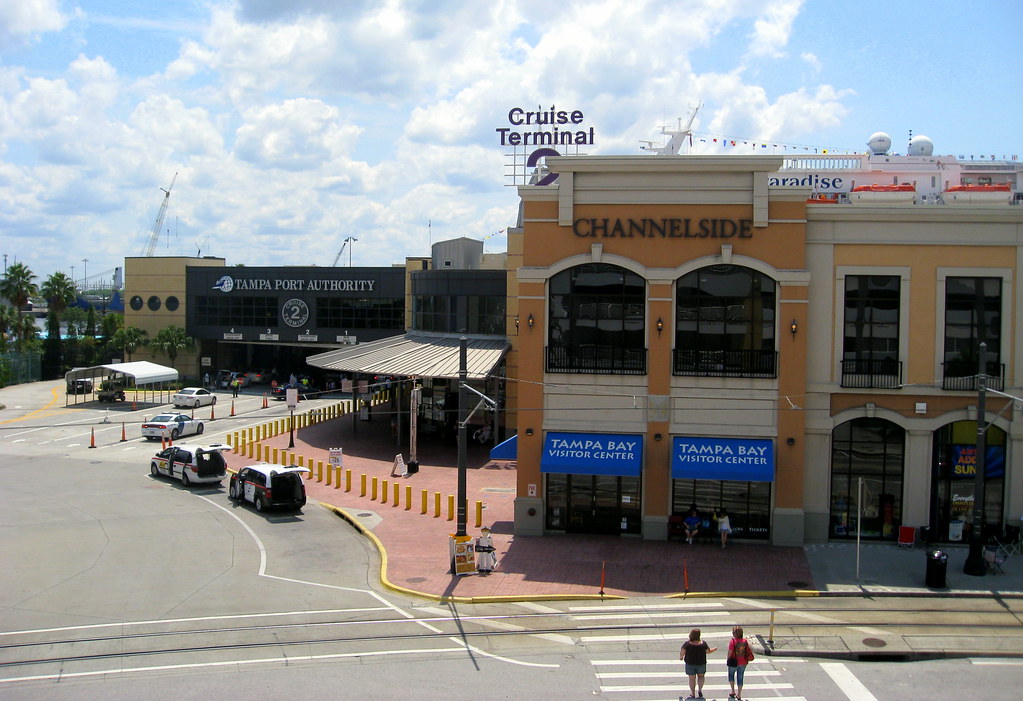
Port Tampa Bay is Florida's largest port by cargo tonnage, handling phosphate, fertilizer, petroleum, and bulk commodities. That freight mix creates a category of CDL work that inland markets do not have: tanker and drayage routes tied to commodity cycles, positions requiring security credentials, and hauls that carry a consistent pay premium over standard dry freight. Drivers with the right endorsements can access port-adjacent roles that applicants without them simply cannot bid on.
The Amazon robotic sortation center that opened in Pasco County - the result of the EDC brokering a land deal through its Ready Sites program - anchored a cluster of logistics activity that generates ongoing demand for delivery and regional CDL operators in the immediate area. Large sortation facilities attract feeder carriers, contract haulers, and last-mile operators who all hire separately. The EDC continues to market comparable sites to logistics tenants, which means the trend is ongoing rather than finished.
At the metro level, Tampa consistently posts one of the highest volumes of commercial driving job listings in the southeastern United States, with well over a thousand open CDL positions visible on major job boards at any given point. That is not a cyclical spike. Population growth, port volume, and Pasco County's deliberate recruitment of distribution businesses keep demand elevated across all CDL classes.
Class A or Class B: What Each License Actually Opens Up Locally
Class A covers combination vehicles - tractor-trailers, tankers, flatbeds, and rigs where the trailer exceeds the federal gross weight threshold. Class B covers single vehicles above that threshold, plus vehicles towing lighter trailers: straight trucks, transit buses, dump trucks, and school buses. Neither is a lesser credential. They open different work categories.
Local Class A options:
- Port drayage - moving containers between Port Tampa Bay terminals and regional distribution yards
- Regional routes on the I-4, I-75, and I-275 corridors connecting Tampa to Orlando, Miami, and Atlanta
- Tanker work: phosphate slurry, petroleum, and liquid fertilizer from port terminals throughout Tampa Harbor
- Over-the-road positions with carriers running Southeast and national lanes out of Tampa terminals
Local Class B options:
- Hillsborough Area Regional Transit bus routes, requiring a Passenger endorsement
- Dump truck operation for construction and aggregate contractors across Hillsborough, Pasco, and Hernando counties
- Local delivery: beverage, food service, and retail distribution with daily home time
- School bus operation through district contractors in the tri-county area
Class B often means home every night and predictable scheduling. Tampa's market has well over seven hundred active Class B listings at a given time - a number generic guides ignore entirely. For a driver with family obligations or a preference for local work, a transit authority or beverage distributor route is a real career, not a placeholder while waiting for Class A opportunities.
Step 1: Meet Florida's Prerequisites
Florida CDL applicants must hold a valid Florida Class E driver's license. Age thresholds matter immediately for route planning: you must be 18 to drive commercially within Florida (intrastate), but 21 to operate in interstate commerce - any crossing of state lines or federally regulated freight. For Pasco County residents considering port drayage runs that extend into Georgia, or any OTR position, the 21-year threshold is not a technicality. It limits what routes you can legally operate until you reach that age.
Other baseline requirements before applying:
- Valid Social Security number, verified electronically by FLHSMV
- Florida residency - CDLs are issued by your state of domicile, not the state where you work
- A Motor Vehicle Record clear of disqualifying offenses - the full list is in FLHSMV's CDL manual
- A DOT physical conducted by an FMCSA-certified Medical Examiner listed on the National Registry
The medical certificate process changed in December 2025, and this catches applicants who rely on older guides. Florida no longer accepts paper DOT medical certificates. Your medical examiner must submit the certificate electronically to the FMCSA before your CDL application can be processed. The paper copy you receive is for your own records only. If your provider is not set up to submit electronically - or simply does not do it - your application stalls regardless of your physical condition. Confirm this with your provider before scheduling the appointment.

Step 2: Get Your Commercial Learner's Permit
The CLP is the permit that allows supervised on-road practice. You cannot get one - and cannot begin behind-the-wheel training - until you complete the theory portion of Entry-Level Driver Training through an FMCSA-registered school. Once your training provider marks your theory completion in the FMCSA system, you visit a Florida tax collector's office or FLHSMV service center. At that appointment, in order:
- Present your Class E license, Social Security documentation, and Florida residency proof
- Pass a vision exam conducted at the service center
- Pass the CDL knowledge tests for the class and any endorsements you are applying for - each is a separate written exam
- Pay the CLP application fee - check FLHSMV for the current amount, as fees are updated periodically
- Receive your CLP, which authorizes supervised driving practice with a qualified CDL holder in the passenger seat
A minimum hold period must pass before you can schedule the skills test. FLHSMV publishes the current required time. Use the hold period to complete your behind-the-wheel ELDT hours.
Step 3: Complete Behind-the-Wheel Training and Pass the Skills Test
The Tampa metro has dozens of FMCSA-registered CDL schools - Tampa Truck Driving School, 160 Driving Academy, and Tampa Truck School (CFI) among them - covering a range of schedules, formats, and price points. Class A programs at private schools typically run three to four weeks full-time. Community college programs may run longer but can offer access to financial aid options that private schools do not qualify for.
The skills test covers three parts: a pre-trip vehicle inspection, basic vehicle control in a closed course, and on-road driving. The pre-trip inspection is where candidates most commonly lose points. Examiners expect you to name and physically touch each component in a specific sequence - walking around vaguely does not satisfy the standard. Schools with strong pass rates drill this until students can complete it consistently without prompting. Ask about first-time pass rates before choosing a school.
Some Tampa Bay programs include a job placement guarantee as part of enrollment, meaning you graduate with a position already arranged. If that structure appeals to you, confirm in writing what the guarantee actually covers - position type, carrier, starting pay range, and home time expectations.
How to Pay for CDL School: Three Paths Compared
The fastest path to a CDL in Tampa Bay is not always the cheapest one, and the cheapest is not always the right fit. Match your funding source to your timeline, your employer obligations to your life situation, and your Class choice to the work you actually want.
| Funding Path | Upfront Cost to You | Who Qualifies | Obligation After Training |
|---|---|---|---|
| WIOA grant via CareerSource Pasco Hernando | None if approved | Unemployed, dislocated workers, youth 18-24 | None - grant, not a loan |
| Company-sponsored (Stevens Transport, PAM Transport) | None upfront | Must pass carrier hiring process | Drive for sponsoring carrier for roughly one year; repay prorated portion if you leave early |
| Self-pay, private school | Full tuition at enrollment or on payment plan | Open enrollment | None - choose any employer after graduation |
| VA benefits (GI Bill or VR&E) | Covered through benefit program | Eligible veterans and service members | None |
The WIOA path is the most overlooked locally. CareerSource Pasco Hernando administers WIOA funding that can cover tuition, books, and testing fees for eligible unemployed adults, dislocated workers, and youth ages 18 to 24. Truck driving qualifies consistently as an in-demand occupation, which means approvals are common. The school you choose must also appear on the local WIOA-approved training provider list, separate from the FMCSA registry.
Company-sponsored training removes the financial barrier but requires careful reading of the agreement before signing. Stevens Transport and PAM Transport (through its Driver Solutions program) cover tuition at partner schools in exchange for a driving commitment - typically around a year with that carrier. If you complete the commitment, a portion of the tuition cost is forgiven. If you leave early, you repay a prorated share. The routes, home time policy, and pay structure during your commitment period are the carrier's to set, not yours. Ask specifically about home frequency and weekly earnings before enrolling.
Endorsements That Pay More in This Market
Most CDL endorsements require only a knowledge test at FLHSMV - no additional behind-the-wheel training and no new license. HazMat is the exception: it requires TSA fingerprinting and a security threat assessment. Each endorsement opens a freight category, and in Tampa Bay's market, specific categories carry real pay differences.
- Tanker (N): Required for liquid bulk and most petroleum loads. Port Tampa Bay moves petroleum and liquid fertilizer - tanker-endorsed drivers access those lanes and the premium that comes with them. Without this endorsement, port terminal tanker positions are not available to you.
- TWIC (Transportation Worker Identification Credential): Not a CDL endorsement - a separate TSA-issued credential required for unescorted access to Port Tampa Bay's secure areas. Port drayage companies require it for terminal work. Apply through TSA well before your target start date; processing takes several weeks.
- HazMat (H): Opens hazardous materials loads and adds meaningfully to annual Florida earnings - check ZipRecruiter and Salary.com for current Tampa market figures. Requires TSA fingerprinting and a background check.
- Combo X (HazMat + Tanker combined): The combination endorsement for drivers working both categories. Commands the highest pay premium among individual endorsements in the Tampa Bay market - significantly above median truckload pay.
- Doubles/Triples (T): A knowledge-test-only add-on covering double and triple trailers. Broadens available loads and modestly increases pay potential for drivers working bulk or distribution lanes.
- Passenger (P): Required for transit and school bus routes. Needed for HART positions and school district contracts in Hillsborough, Pasco, and Hernando counties.
Where to Find CDL Jobs in Pasco County and Tampa Bay
The market divides cleanly by class and endorsement. Knowing which category you are targeting before you graduate focuses your job search and helps you choose the right endorsements during training.
- Port drayage companies: Moving containers between Port Tampa Bay terminals and regional distribution yards. Requires Class A, TWIC for terminal access, and often a Tanker endorsement for liquid freight assignments. Pay runs consistently above standard regional rates, and most drayage is local or regional - home time is generally predictable.
- Paw Trucking (Tampa, operating since 1983): A regional carrier serving Pasco, Pinellas, Hillsborough, and Hernando counties that actively recruits Class A drivers. A realistic first employer for new graduates who want home-daily or regional routes rather than OTR work. Long local history makes it a stable option in an otherwise volatile carrier market.
- Amazon DSP network: The Pasco County sortation center feeds a contractor network hiring commercial drivers for delivery routes. Scheduling is structured and pay is consistent - a good fit for Class B holders or drivers who want predictable hours while building experience.
- HART (Hillsborough Area Regional Transit): A government employer hiring Class B CDL holders with a Passenger endorsement for fixed-route bus positions. Set schedules, strong benefits, and stable funding - popular among drivers prioritizing work-life balance over maximum earnings.
- Dump truck and construction contractors: Pasco and Hillsborough counties both have active building markets. Dump truck operators work Class B equipment; demand tracks construction permit activity, and work is entirely local.
- OTR carriers with Tampa terminals: Stevens Transport, PAM Transport, and national carriers with Tampa-area hubs recruit here for drivers willing to spend time away from home. OTR positions generally carry higher annual earnings for Class A holders but involve significantly less home time than local or regional routes.
For port-specific positions, check directly with drayage companies that operate in the terminal complex - those roles often do not appear on public job boards. Glassdoor, Indeed, and the CareerSource job board all list active Tampa Bay CDL openings across categories.